
About AzerbaijanBASIC INFORMATION
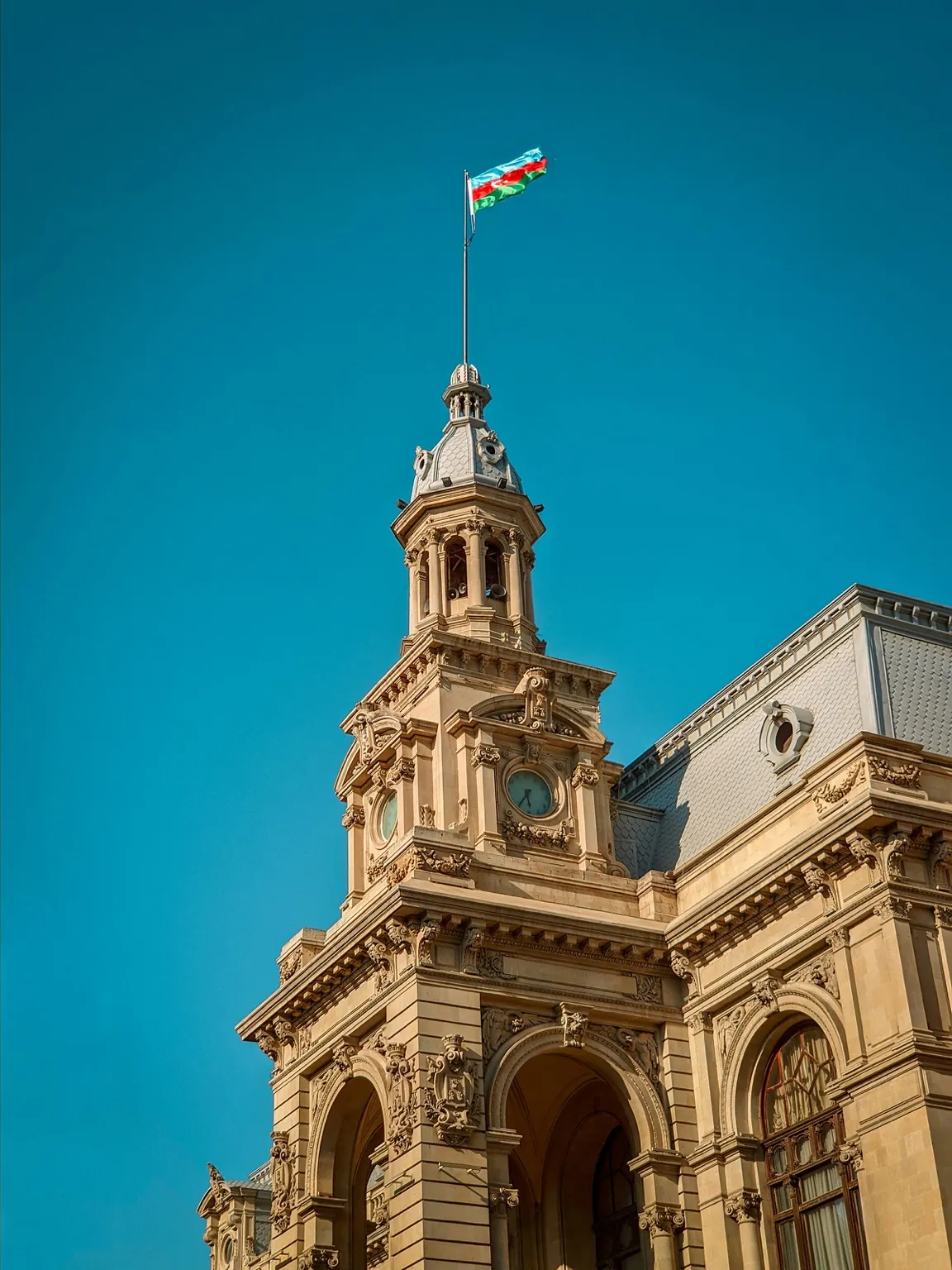
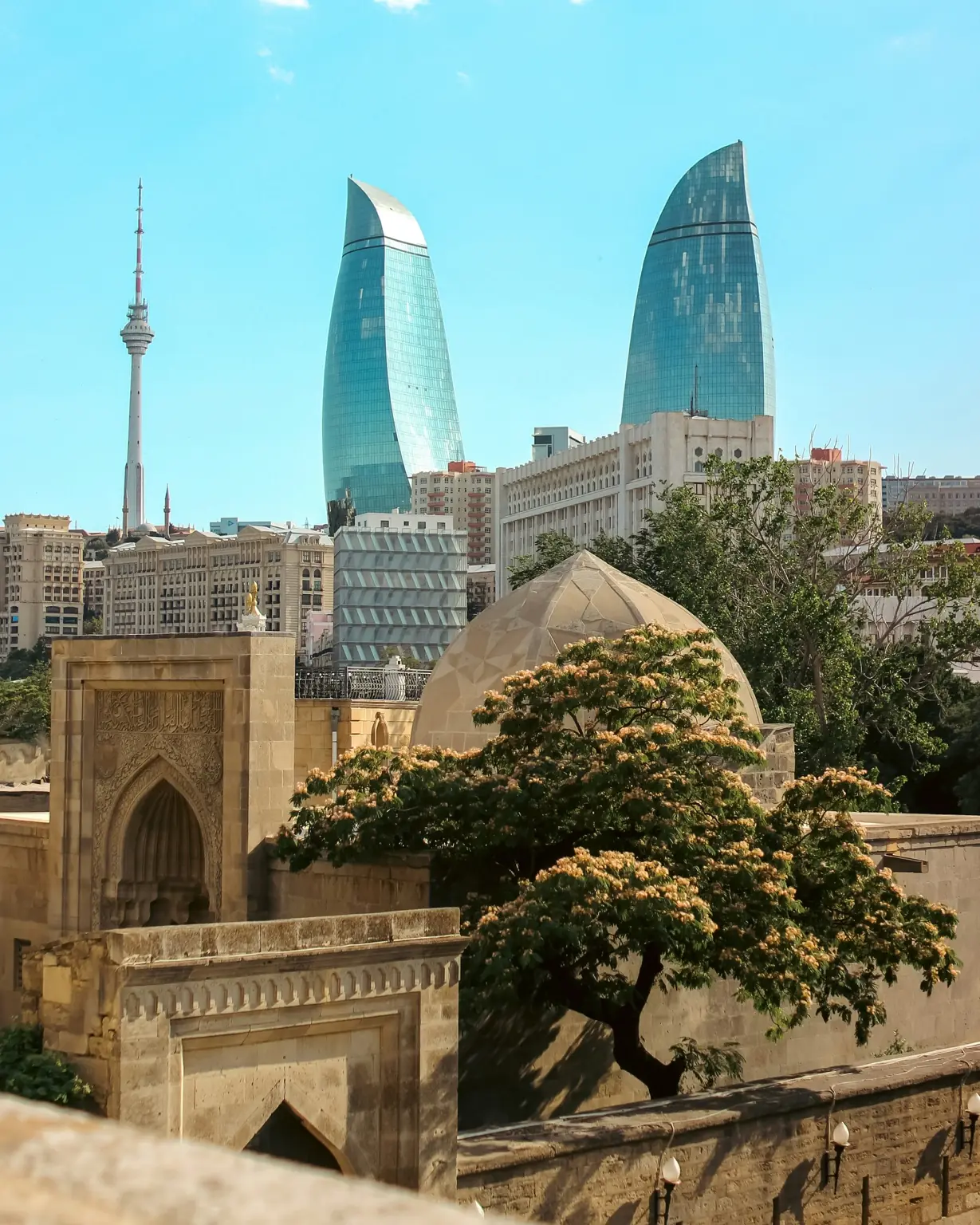
Azerbaijan sits between Europe and Asia, where the historic Old City’s stone alleys meet a skyline of striking modern architecture. Beyond the capital, the Caucasus mountains, rich cultural traditions, and flavorful cuisine showcase the country’s unique charm. Known as the “Land of Fire,” Azerbaijan welcomes visitors with warm hospitality and countless new discoveries.
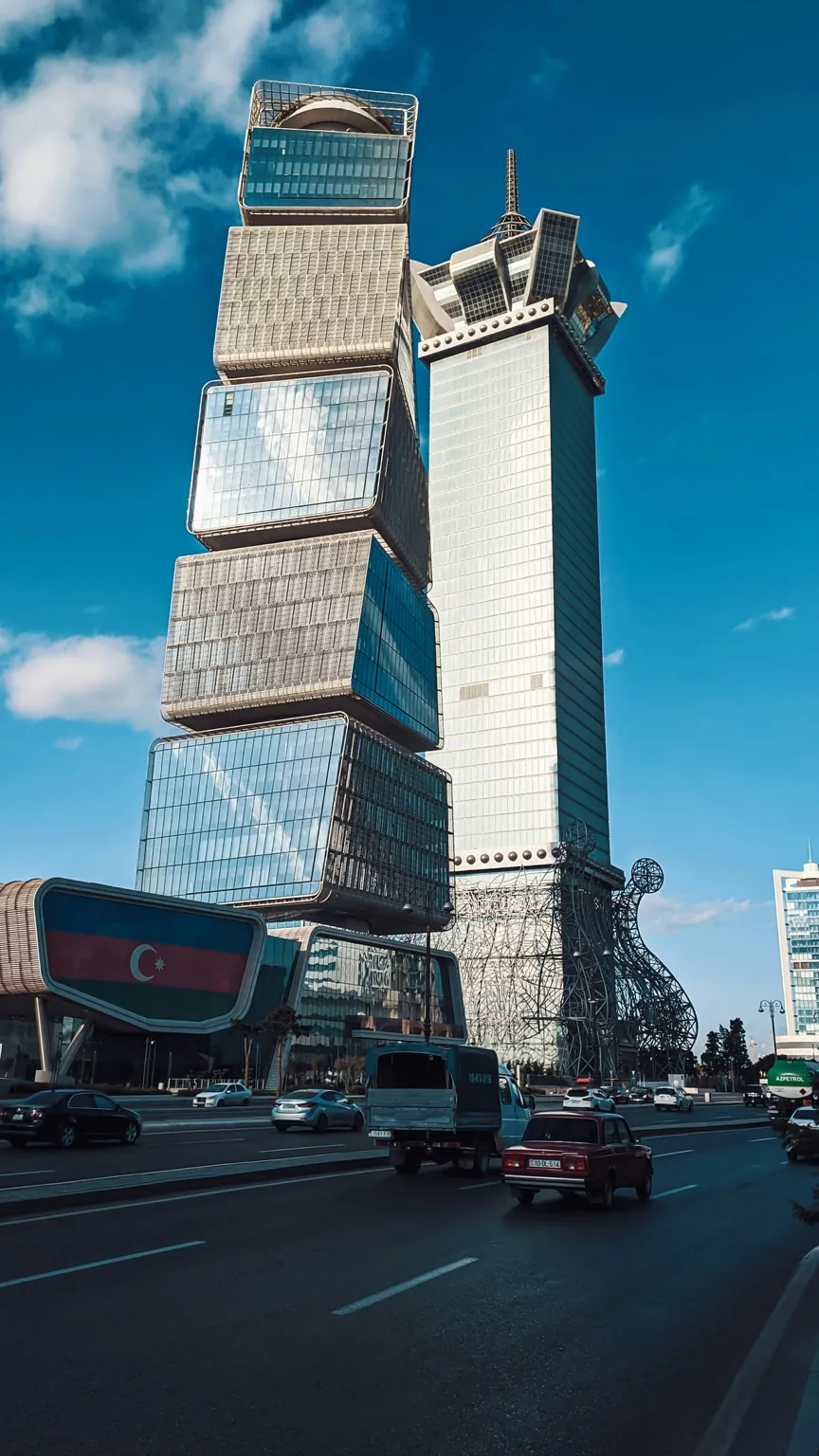
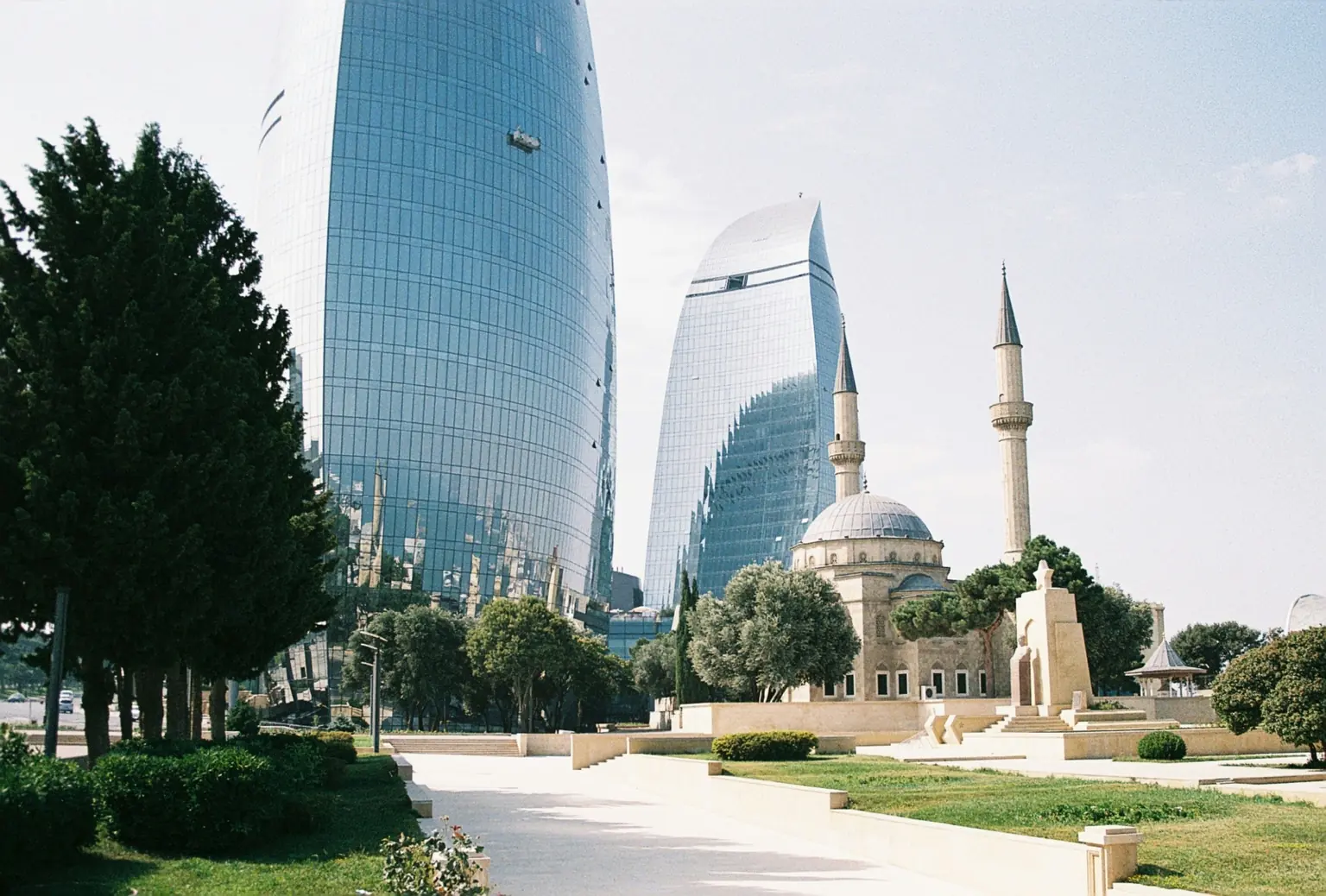
Located at the crossroads of Europe and Asia, Azerbaijan stretches across the diverse landscapes of the Caucasus. In the UNESCO‑listed Old City, narrow stone alleys and ancient walls echo centuries of history, while just beyond them, futuristic skyscrapers rise dramatically against the skyline.
Beyond the cities, the country offers vast Caucasus mountains, rich cultural traditions, and a distinctive cuisine known for its fragrant herbs and bold flavors.
Warm and welcoming, the people of Azerbaijan create a sense of familiarity even for first‑time visitors. Known as the “Land of Fire,” the country promises discoveries and moments of wonder waiting to be explored.
Azerbaijan in Data
Republic of Azerbaijan
"The Land of Fire," located on the western shore of the Caspian Sea in the Caucasus region
Baku
A port city where the UNESCO-listed Old City coexists with striking modern architecture

Population
Approx. 10.5M
similar in size to Sweden

Area
86,600km²
about the size of Austria or South Carolina

220V

Azerbaijani

4 Seasons

Safestable

AZN(Manat)
Big-city prices match Western Europe; overall costs are about half
Predominantly Muslim, yet secular and multi-ethnic
Known for oil and natural gas; rich in minerals like gold and copper
Republic of Azerbaijan
"The Land of Fire," located on the western shore of the Caspian Sea in the Caucasus region
Baku
A port city where the UNESCO-listed Old City coexists with striking modern architecture
220V
plug types C/F. Check
device voltage
Safestable
Major cities are stable. Basic precautions recommended.
Approx.10.5M
similar in size to Sweden
86,600km²
about the size of Austria or South Carolina
Azerbaijani
English understood in tourist areas.
AZN(Manat)
1 AZN ≈ 1 USD
≈ 0.9 EUR
4 Seasons
Low humidity;
comfortable in cities.
Big-city prices match Western Europe; overall costs are about half
Predominantly Muslim, yet secular and multi-ethnic
Known for oil and natural gas; rich in minerals like gold and copper
As of February 2026.
Exchange rates and visa requirements may change, so please check the latest information before traveling.
Geography & Location


Region
Located in the Caucasus, at the crossroads of Europe and Asia.
Latitude
Situated at roughly the same latitude as northern Japan (Tohoku region).
Sea
Its eastern side borders the Caspian Sea.
Neighboring Countries
Georgia, Turkey, Russia, Iran, and Armenia.
Exclave
The Nakhchivan Autonomous Republic is separated from the main territory and also borders Turkey.
Cuisine
A land of fragrant, spice-rich meat dishes and a warm, welcoming tea culture.
Azerbaijan's cuisine is defined by fragrant, spice-rich meat dishes and a warm tea culture that offers a moment of relaxation during your travels.
Lamb and beef are commonly used, enhanced with aromatic spices that create deep, satisfying flavors.
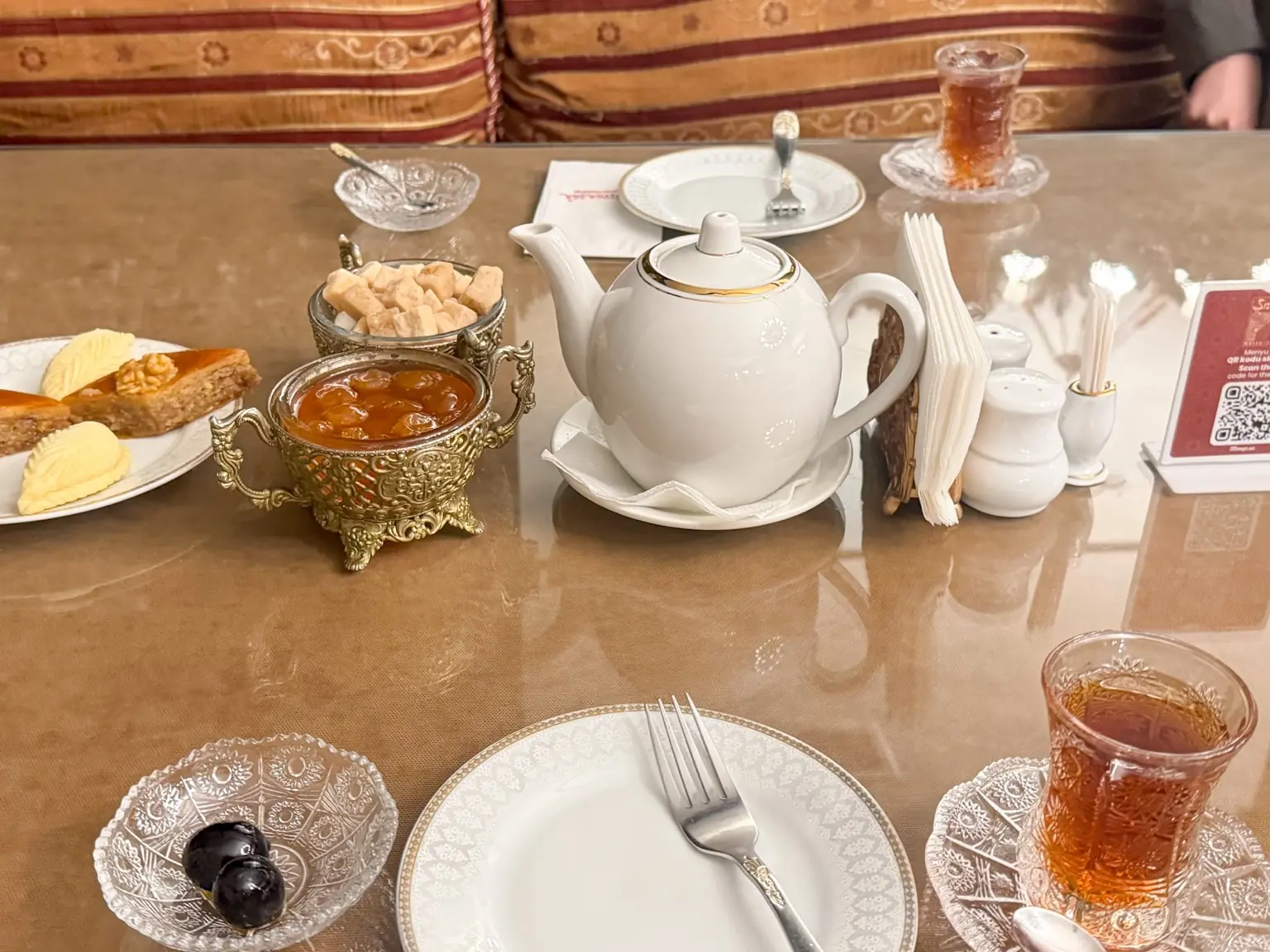
After meals, it's customary to enjoy black tea (chai) served with jam or sweets — a gesture of hospitality found both at home and in restaurants.
Signature Dishes
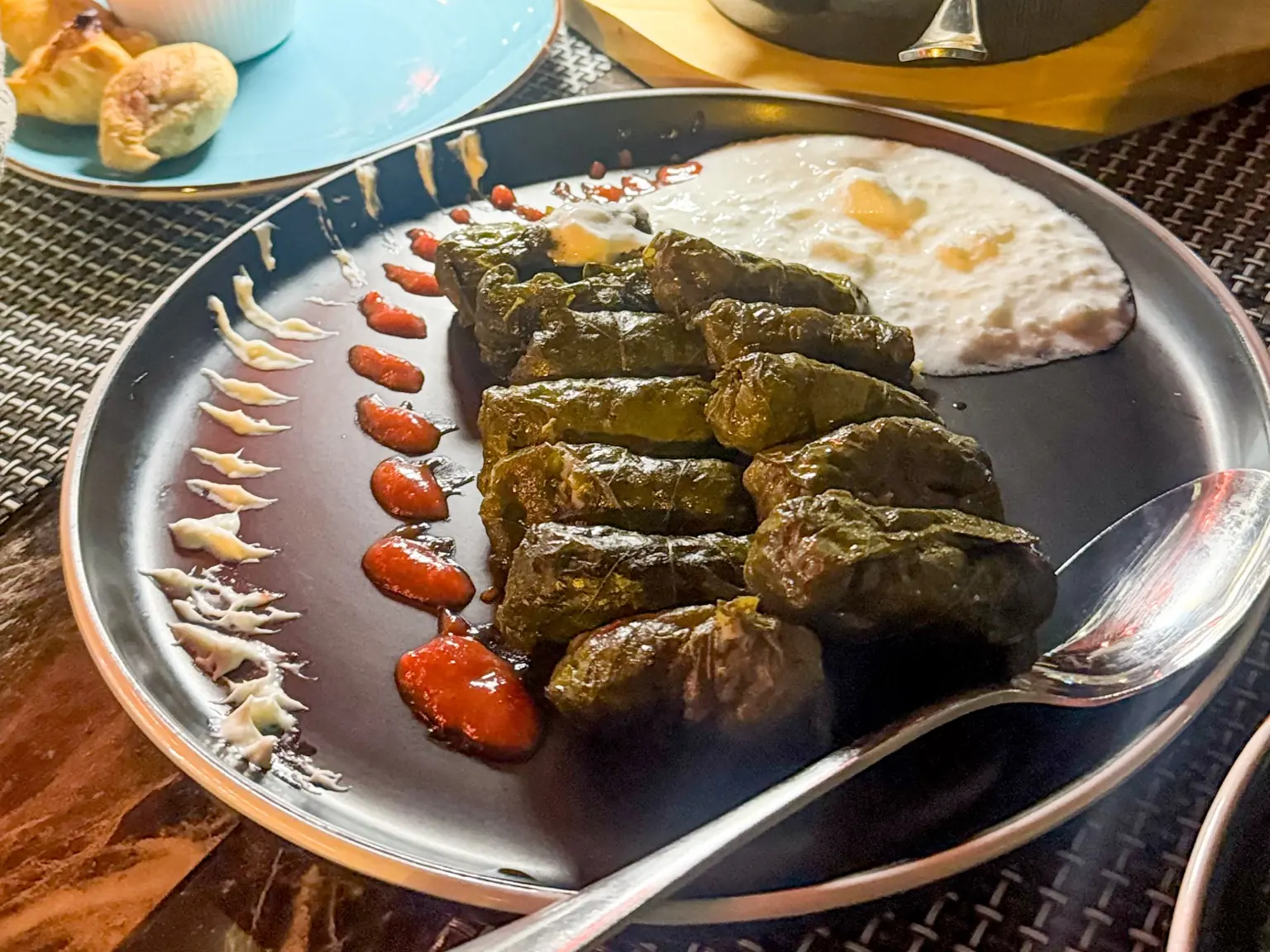
Dolma
A traditional dish of grape leaves or vegetables stuffed with minced meat, rice, and herbs. Mild in flavor with a gentle herbal aroma, it’s a classic of Azerbaijani home cooking.
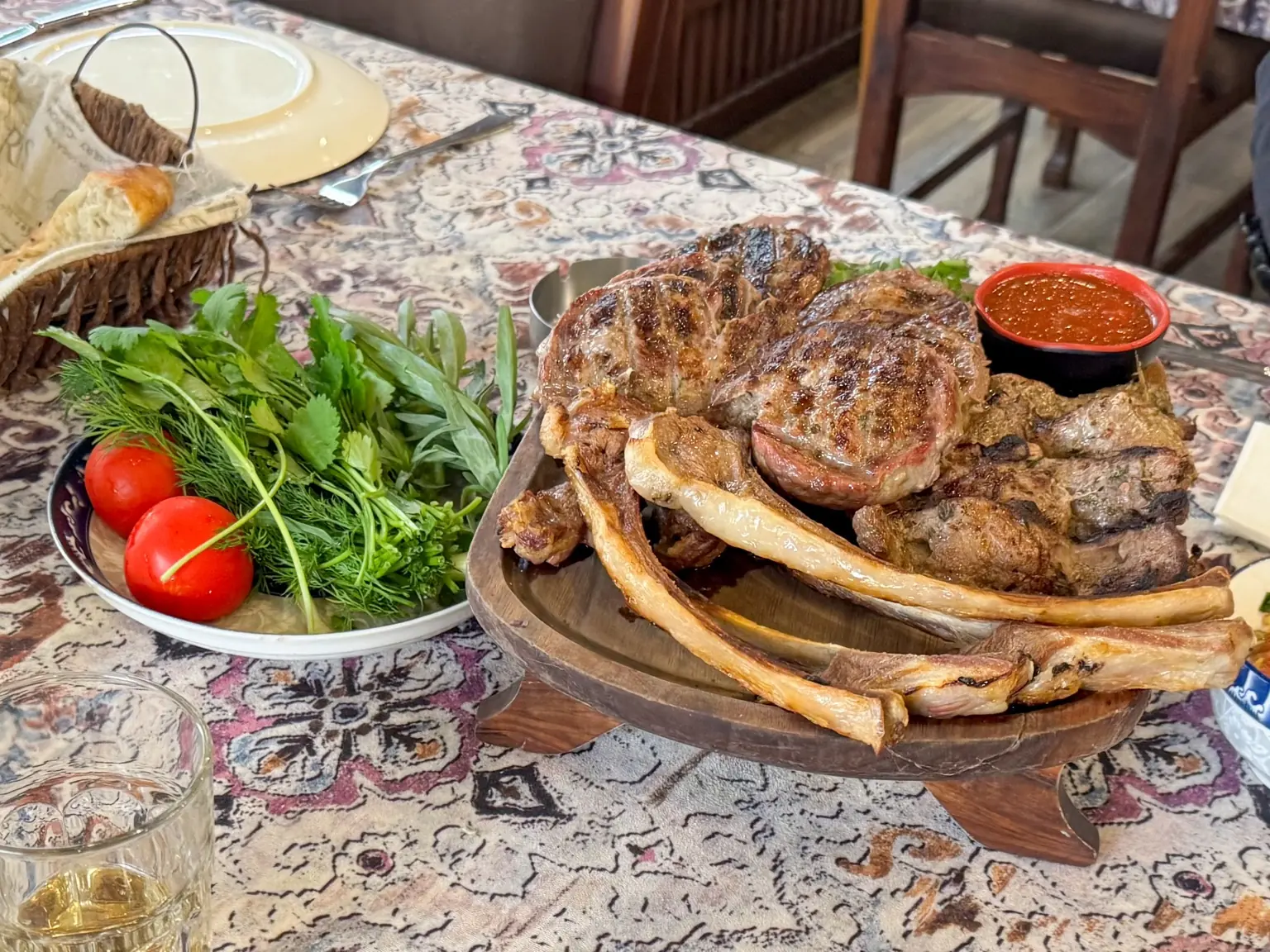
Kebab
Simply seasoned pieces of lamb or beef grilled over a hot plate or open flame. Served without skewers and enjoyed with onions, herbs, and fresh vegetables.
Tea & Sweets
Strong black tea is enjoyed with fruit jam for a touch of sweetness. Popular treats include pakhlava and the colorful honey-coated snack “chak-chak,” a staple of local hospitality.
Dining Culture & Etiquette
Sharing is Common
Many restaurants serve dishes on large plates meant to be shared at the table.
Mostly Halal-Friendly
Pork dishes are limited. If you have dietary concerns, it's best to check with the staff before ordering.
Bottled Water Recommended
For peace of mind, especially when traveling, bottled mineral water is the safest choice.
Rice as a Staple
Rice is eaten regularly alongside bread, making the cuisine familiar and approachable for Japanese travelers.
Flag Meaning
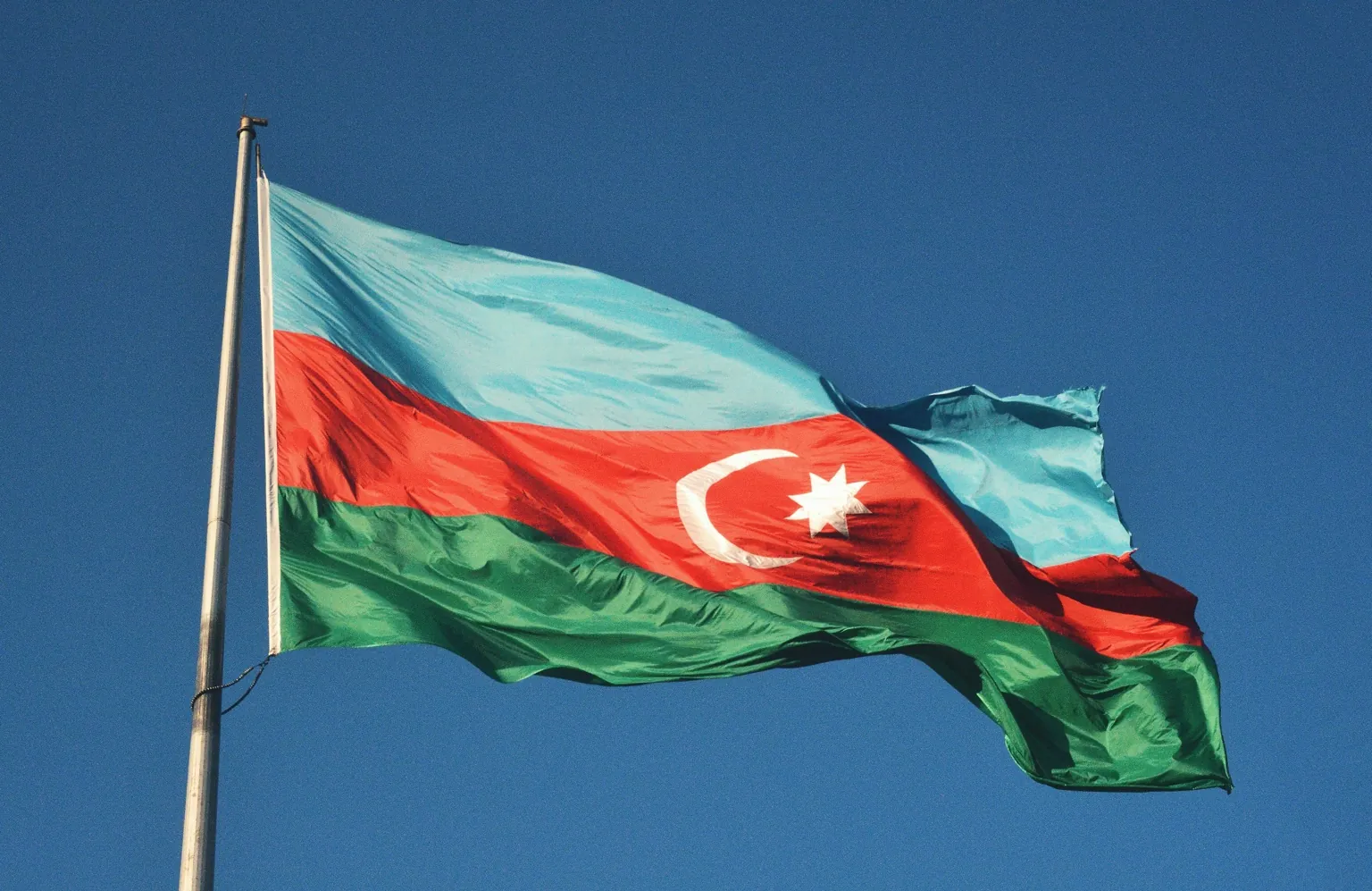
The flag of Azerbaijan features three horizontal stripes—
blue, red, and green—
with a white crescent and an eight-pointed star at the center.
This color represents the Turkic heritage of the Azerbaijani people.
It symbolizes their pride and connection with other Turkic nations such as Turkey and Kazakhstan.
The red stripe reflects the country's commitment to modernization and progress.
It embodies aspirations for national development, democracy, and a brighter future.
Green signifies Azerbaijan's deep ties to Islam.
With around 97% of the population identifying as Muslim, the color highlights the strong presence of faith in everyday life.
The white crescent is a traditional symbol of Islam, while the eight-pointed star represents the Turkic peoples.
The eight points are said to correspond to eight historical Turkic groups. Together, these symbols express Azerbaijan's ethnic and religious identity.
The meaning of the national flag varies depending on the interpretation
Public Holidays
Jan.
January 1-2
New Year
A holiday celebrating the start of the new year, typically spent with family.
January 20
National Mourning Day ("Black January")
A day of remembrance honoring the victims of the tragic events of January 1990.
Mar.
March 8
International Women's Day
A day to recognize and appreciate the social and cultural contributions of women.
March 20-24
Novruz (Spring Festival)
A traditional celebration marking the arrival of spring and new beginnings, enjoyed with family and friends.
March 20-21
Ramadan Bayram (Eid al-Fitr)
An Islamic holiday celebrating the end of the fasting month of Ramadan. (Dates vary each year.)
May
May 9
Victory Day
Commemorates the victory over fascism in World War II.
May 27-28
Eid al-Adha (Gurban Bayram)
An Islamic holiday emphasizing prayer, charity, and community. (Dates vary each year.)
May 28
Independence Day
Marks the founding of the Azerbaijan Democratic Republic in 1918.
Jun.
June 15
National Salvation Day
A day commemorating the restoration of political stability after the 1993 crisis.
June 26
Armed Forces Day
Celebrates the establishment of the Azerbaijani Armed Forces, with ceremonies and events held nationwide.
Nov.
November 8
Victory Day
Marks Azerbaijan's victory in the Second Nagorno-Karabakh War.
November 9
National Flag Day
Celebrates the adoption of the national tricolor flag and honors its symbolism.
Dec.
December 31
Day of Solidarity of World Azerbaijanis
A day celebrating unity and connection among Azerbaijanis around the world.
History
Ancient
BCE
Beliefs that revered fire as sacred took root in this region, shaping its deep connection with Zoroastrianism. This heritage forms the origin of Azerbaijan's nickname, the "Land of Fire."
Medieval
7th c.
With the expansion of Arab powers, Islam spread throughout the region, becoming a foundation of society and culture.
11th–13th c.
Azerbaijan flourished as a key hub along the Silk Road. Trade intensified, cities grew, and the area developed into a crossroads of diverse cultures.
16th Century
The region came under the influence of Safavid Persia, strengthening political and cultural ties to the Persian sphere.
Modern
1813
Annexed by the Russian Empire under the Treaty of Gulistan.
1918
Declared independence as the Azerbaijan Democratic Republic. Notably, it became the first Muslim-majority nation to grant women the right to vote, marking a significant milestone in regional history.
1920
Incorporated into the Soviet Union.
Contemp.
1991
Regained independence following the dissolution of the Soviet Union.
2000s–
Rapid economic growth driven by the oil industry, accompanied by major modernization in Baku.
Contact UsCONTACT
Feel free to contact us.
For guide arrangements, travel consultations, or any other inquiries,
you are welcome to contact us.
Support is available in Japanese and English.