Contact UsCONTACT
Feel free to contact us.
For guide arrangements, travel consultations, or any other inquiries,
you are welcome to contact us.
Support is available in Japanese and English.
For guide arrangements, travel consultations, or any other inquiries,
you are welcome to contact us.
Support is available in Japanese and English.
.png?w=1600&q=75&fm=webp&fit=cover)
You might have caught Azerbaijan in the news recently.
In May 2026, Japanese oil giant ENEOS made its first-ever import of Azerbaijani crude oil — about 283,000 barrels, roughly 10% of Japan's daily consumption — arriving at the Negishi refinery in Yokohama. The reason? Escalating tensions around Iran and the Strait of Hormuz. (Source: Yahoo! News Japan)
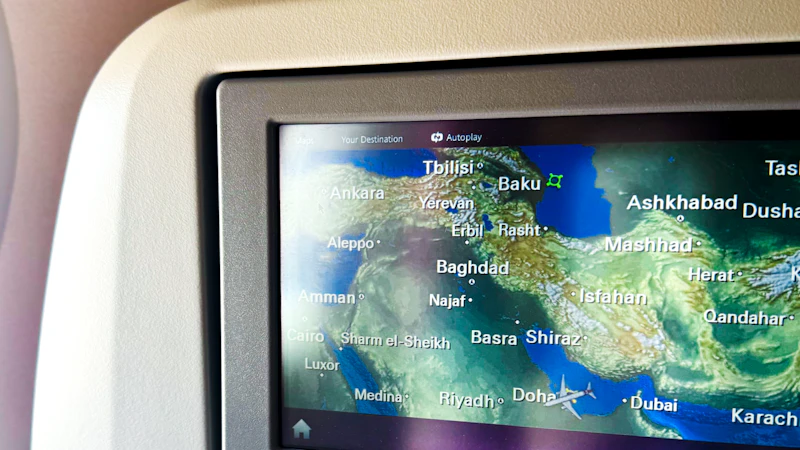
"Wait… Azerbaijan. Where exactly is that?"
That's probably the first question that comes to mind. But here's the thing — among travelers, Azerbaijan has quietly earned the nickname "the world's most pro-Japan country." Go there yourself, and you'll quickly see why. The moment you say you're from Japan, people light up.
The connection between Azerbaijan and Japan runs deeper — and further back in history — than most people realize. Here are two key reasons.
After World War II, the Soviet Union sent Japanese internees to Baku, where many worked in oil field development. What stayed with local people wasn't the labor itself, but the quiet dignity those workers carried — their politeness, their cleanliness, their calm. That impression was passed down through generations by word of mouth, and echoes of it can still be felt today.
Japan's transformation from a war-devastated country into one of the world's leading economies made it an inspiring blueprint. Azerbaijan, looking to diversify beyond its oil dependency, saw Japan as the ideal model.
This connection goes right to the top. President Ilham Aliyev's father, former President Heydar Aliyev, played a key role in bringing a Japanese company to Baku to build what became the first air conditioning factory in the former Soviet Union. And Ilham himself visited Japan in 2006, reportedly leaving deeply impressed by the country's hospitality and postwar resilience — a visit that shaped his push to incorporate Japanese culture and values into Azerbaijan's development.
Japan also backed this relationship with action. By 2017, Japan had provided over 110 billion yen in economic aid to Azerbaijan, holding the top spot as the country's largest donor for five consecutive years from 2013 to 2017. The support focused on agriculture, irrigation, and energy — areas that directly affect people's lives. And crucially, Japan asked for nothing in return. That approach built a deep well of trust.
.png)
Azerbaijan isn't on most travelers' radar, which means meeting someone from Japan can genuinely feel like a rare and exciting thing for locals.
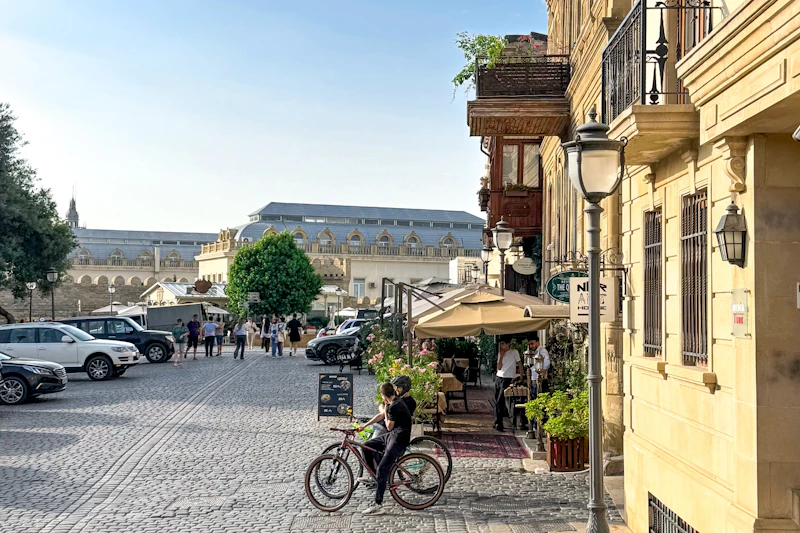
Walk through the old city, sit down at a café, and don't be surprised if someone approaches you out of pure curiosity. There's no sales pitch, no ulterior motive — just honest interest. Tell them you're from Japan, and you'll often hear responses like "Japan makes the best products," "Japanese people are so respectful," or "I love Japanese culture." The depth of knowledge is striking.
Much of the world wonders what Azerbaijan is. Azerbaijan already knows what Japan is. That gap — and the warmth that comes with it — is one of the reasons we created Try! Azerbaijan.
.png)
One of the biggest drivers of Azerbaijan's love for Japan is anime and manga.
Among younger Azerbaijanis, Japanese animation is everywhere. Naruto, Demon Slayer, Attack on Titan — titles beloved by fans around the world have made their way to the far reaches of the South Caucasus. Some fans have even started teaching themselves Japanese just to hear their favorite characters speak in the original language.
And it goes beyond personal fandom. In December 2024, Baku Sports Palace hosted "Gamesummit 2024" — a large-scale event combining anime, cosplay, and K-pop dance. Then in September 2025, Comic Con Baku made its debut at the Baku Convention Center, featuring cosplay shows and even a presentation by the Japanese Embassy. Smaller events happen throughout the year too.
The fact that the Japanese Embassy showed up says a lot. What started as fan culture has grown into something recognized at a diplomatic level.

Japan's cultural footprint in Baku isn't just about entertainment — it's made its way onto the menu too.
Sushi restaurants are dotted throughout the city, and "Japanese food = sushi" is a widely held association among locals. Roll-style sushi is especially popular. Places like Sushi Room Baku have built a loyal following among Azerbaijanis who visit regularly — not just as a novelty, but as an everyday dining choice.
That said, visiting as someone from Japan is a bit of a surreal experience. The sushi here has taken on a local personality — there was even one variety that looked suspiciously like takoyaki (laughs). There don't appear to be any Japanese-owned restaurants in Baku at the moment, but watching locals embrace Japanese food culture in their own way is endearing. Hopefully, one day, the real thing will find its way there too.
.png)
This one surprises a lot of people: Azerbaijan has won Olympic medals in judo.
Since judo originated in Japan, this has helped cement the idea of "Japan = the home of judo" in the minds of many Azerbaijanis. It's a different kind of connection from anime — rooted in sport and discipline rather than pop culture — but it runs just as deep.
The interest in Japan doesn't stop at anime or sports.
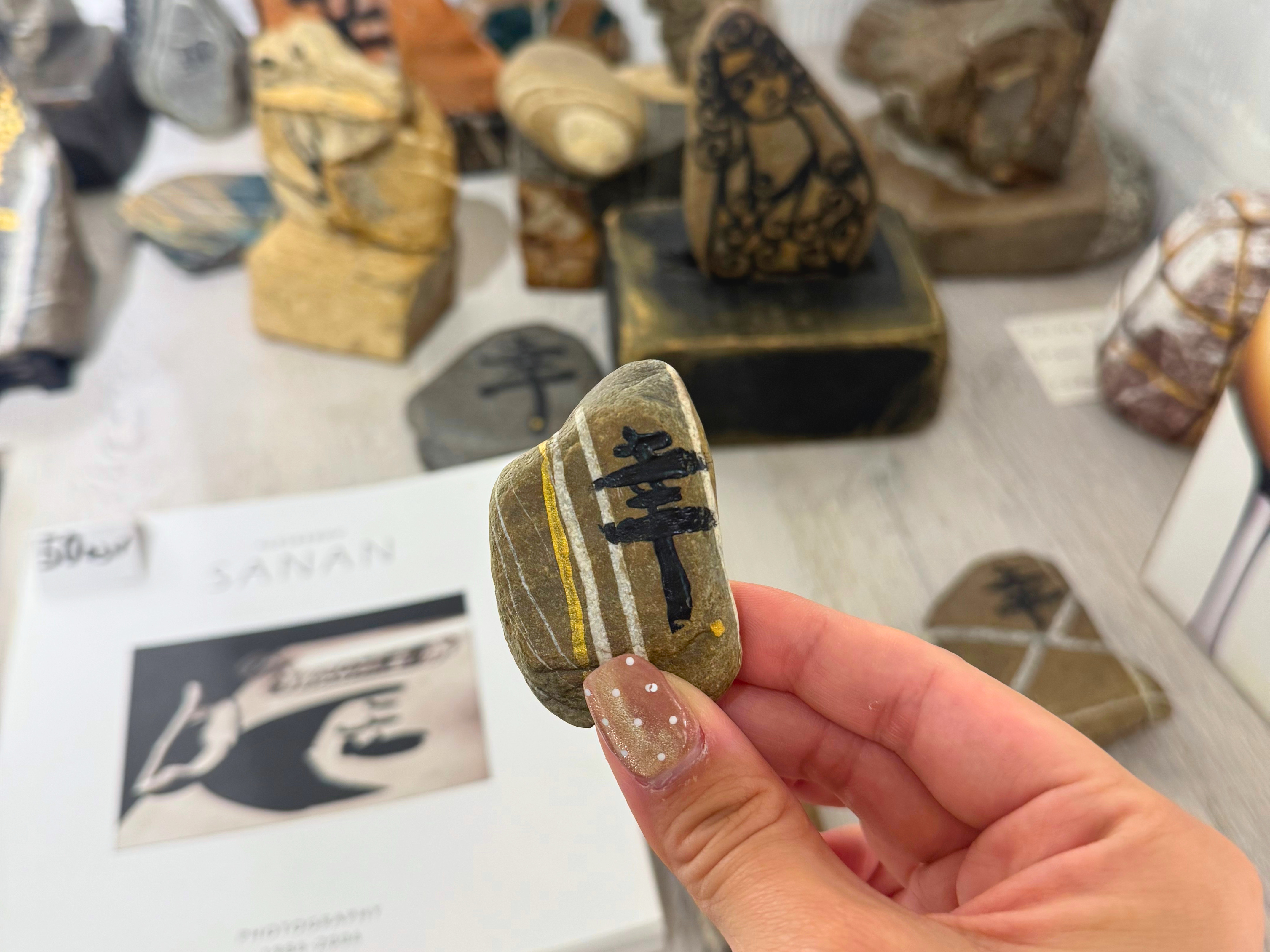
While visiting a beautiful photo gallery in the village of Kish, near the UNESCO-listed ancient city of Sheki, the owner turned to us and said:
"I really love the Japanese concept of wabi-sabi."
Honestly, it stopped us in our tracks (laughs). The idea that Japan's aesthetic philosophy — the beauty found in imperfection and impermanence — had reached this quiet corner of the Caucasus was genuinely moving.
It also made us reflect: how well can we actually explain wabi-sabi ourselves? There's something humbling about having your own culture reflected back at you from the other side of the world. Every encounter like this is a reminder to understand Japan more deeply, so we can share it more honestly.
Every time we visit Azerbaijan, the same thing happens: someone comes up and starts a conversation.
Wandering through the old city, taking a break at a café — "Where are you from?" is never far away. Say "Japan," and watch someone's face change. Eyes widen. A big smile. "No way! Can we take a photo together?" It's happened more times than we can count, and it never gets old.
This isn't the kind of attention you get from vendors trying to make a sale. It's genuine curiosity. Real warmth. The kind that stays with you long after you've come home.
To many people, Azerbaijan is an unknown country. To Azerbaijanis, a Japanese person walking through their city is something worth celebrating. That contrast is what travel is made of.
.png)
Azerbaijan and Japan. At first glance, two countries that seem to have nothing in common. But look closer, and you find threads running between them — history, economic ties, anime, judo, the philosophy of wabi-sabi.
If you came across Azerbaijan in the news recently and found yourself curious, we hope this gave you a reason to look a little further.
The world already knows about Japan. Maybe it's time Japan got to know Azerbaijan.
Theme | Key Point |
|---|---|
🏛️ History | Japanese WWII internees left a lasting impression, passed down through generations |
📈 Economy | Japan's postwar recovery became a development model for Azerbaijan |
🏢 Institution | The Baku Japan Center and university Japanese programs have formalized the connection |
📺 Anime & Manga | Comic Con Baku drew the Japanese Embassy — the fandom runs deep |
🍣 Sushi | Sushi restaurants are popular across Baku, with a local twist |
🥋 Judo | Azerbaijan has won Olympic judo medals — and knows where the sport comes from |
🎋 Wabi-Sabi | Japanese aesthetic philosophy has reached the South Caucasus |
🤝 On the Ground | "You're from Japan?!" — expect a warm welcome |
Want to know more about what Azerbaijan is actually like? Read this next 👉 Azerbaijan in 3 Minutes: A Friendly Guide to a Surprisingly Fascinating Country